

Forgiving Herself for Past Mistakes
The discovery that she had spent so much of her life abandoning herself in an effort to be loved and accepted took Lady Uppity’s breath away.
As she sat in the early morning light, sipping her coffee and wondering what might come next, she felt an unexpected surge, like the undercurrent of an ocean tide. It seemed to be calling her to gather herself back together. Not in an urgent, must-do sort of way, but more like an invitation to a grand adventure.
And this adventure of gathering herself back was both terrifying and exciting.
Yet it seemed the natural next step, to bring home the parts of her she had denied all those years in her effort to gain acceptance of herself and from others.
She knew in her heart that all of it—the jobs, the relationships, the stories, the losses, the triumphs—had contributed to the woman she was today. Every life event had become a thread in a multi-colored, multi-dimensional, ever-flowing, ever-changing gown.
She was…
The woman at peace and the woman terrified by life’s unknown.
The woman who trusts and the one who worries.
The woman who seeks and the woman afraid of what she might find.
But what about the parts of her past she’d rather not remember? Not just the wounds, but the regrets. The embarrassing moments. The choices.
Some made hastily. Others made with thought and kindness.
Now, during meditations, walks, and even dreams, these memories seemed determined to return. Many brought fear. She still found herself whispering:
I should have known better.
I’d do it differently now if I could.
Lady Uppity had spent years trying to become herself. Now she discovered she must also welcome herself. That felt like a different conversation entirely.
While washing the breakfast dishes, she found herself wondering why it seemed so easy to forgive others, yet so difficult to forgive herself.
Lady Uppity knew, deep in her heart, that forgiveness was not about excusing wrongs done.
Still, she couldn’t seem to loosen the grip that shame and guilt held in certain corners of her past.
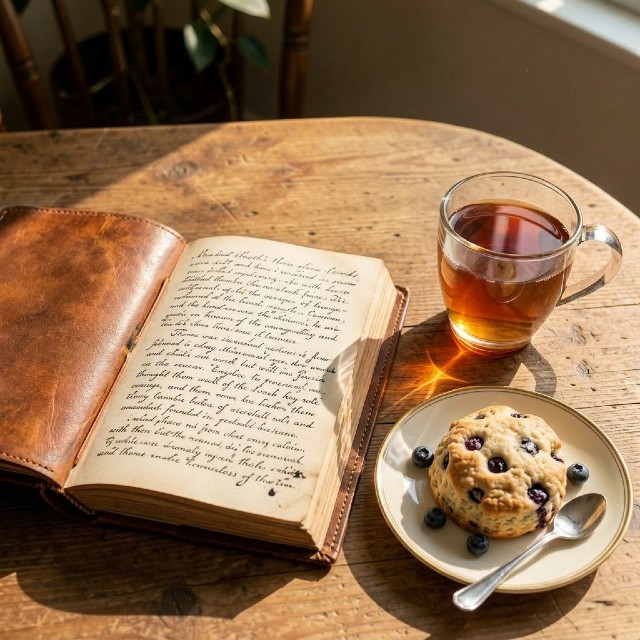
That particular morning, while searching through an old journal for an entirely different reason, she came across a note written in her own hand:
The crime has long ended. Stop using your old mistakes as evidence that you are not good enough.
Tears welled unexpectedly. A knot rose in her throat. Is this what I’ve been doing all these years? Prosecuting myself over and over again?
Memories arrived uninvited. While folding laundry. While driving to the grocery store. While standing in line at the pharmacy. Suddenly, a moment from twenty years ago appeared as though it happened yesterday.
Lady Uppity gently closed the journal and sat quietly.
Perhaps, she thought, the deeper question is this:
Who is remembering: the woman who made the mistake, or the woman who has spent decades learning from it? Are they truly the same person?
The answer arrived not as a revelation, but as a softening.
“I forgive myself,” she whispered through her tears.
Not because I was perfect. Not because it didn’t matter. Not because I would do it again. But because I paid my dues. I am no longer willing to keep serving a life sentence for a past crime.
Lady Uppity had forgiven former husband, difficult relatives, old friends, strangers, politicians, and even the neighbor who continually left the trash can in the middle of the road. Yet there remained one person she still cross-examined on a regular basis.
Herself.
She made a fresh cup of tea, placed a blueberry scone on a small plate, settled into her outrageously comfortable chair, and began to write.
She wondered if perhaps forgiveness was simply another form of acceptance.
Can I be myself without editing the past? The question felt foundational. So many of us secretly believe that we will finally find peace once we have rewritten our history.
But the truth is, the past never changes. Only our relationship with it does.
And until we forgive ourselves, the past becomes a prison cell with the door standing open. The door has been unlocked for years.
Lady Uppity finally saw that she had simply been standing inside, unaware that she was free to leave.
“Forgiveness is for yourself because it frees you. It lets you out of that prison you put yourself in.”
— Louise Hay
Not because the past disappears. Not because mistakes vanish. But because at some point we realize the sentence is over.
And perhaps it has been over for a very long time.